What is executive search?
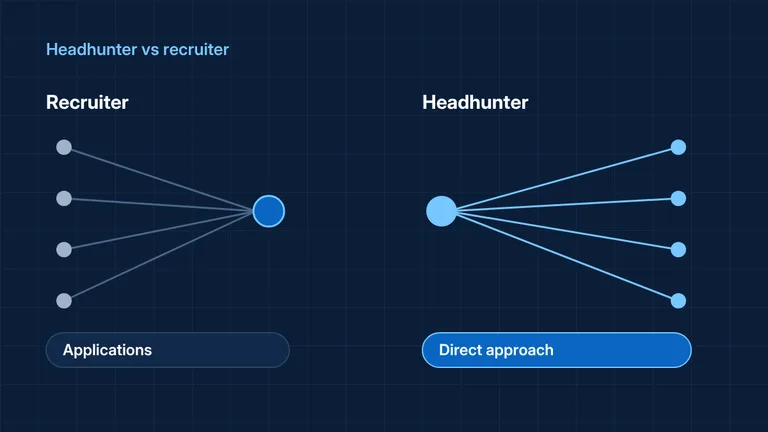
Executive search is a way of hiring for senior, specialist and hard-to-fill roles. A search firm maps the market, approaches suitable people directly, including those who are not looking for a job, assesses them against your brief and presents a short list. It is also called headhunting or direct search.
What does an executive search firm do?
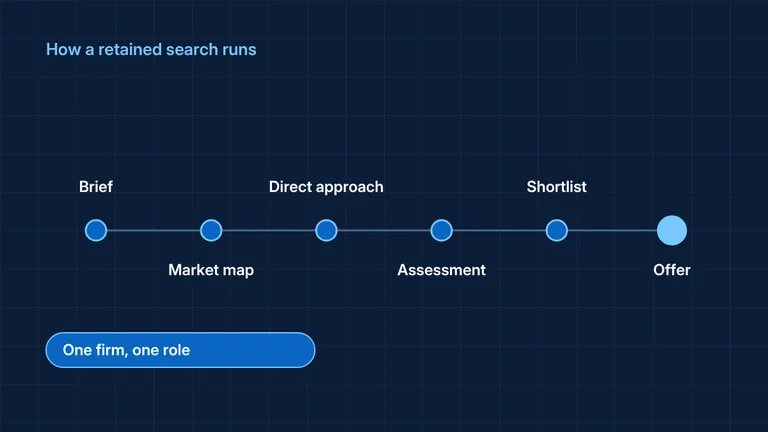
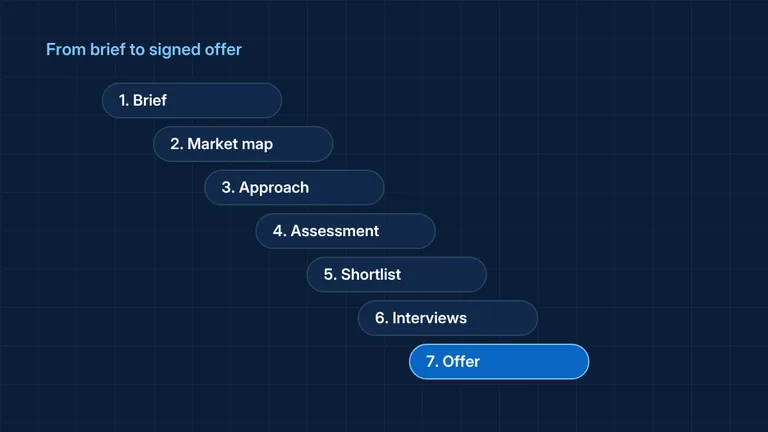
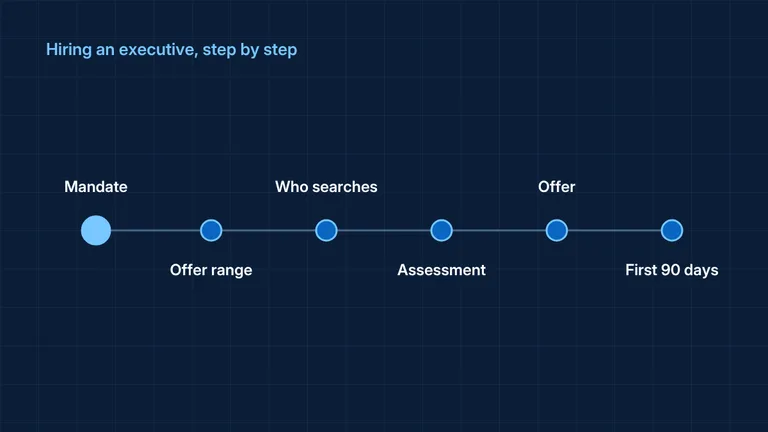
An executive search firm works on one role at a time and stays with the search from the brief to the signed offer. A typical search covers six steps:
- Brief. What the person must achieve, the experience that matters, the offer range and who decides.
- Market map. The companies and roles where suitable people work today.
- Direct approach. Contacting people one by one and explaining the role.
- Assessment. Interviews against the brief and checks of experience, motivation and expectations.
- Shortlist. A few candidates, each with a written view of why they fit and what is uncertain.
- Offer. Feedback from both sides and support until a candidate signs.
Each step is described in the executive search process. To prepare the first one, see how to brief a recruiter.
What does an executive search consultant do?
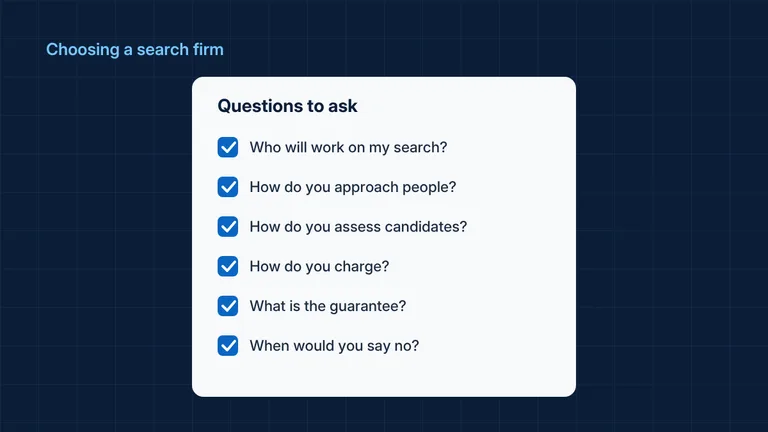
The consultant is the person who runs your search. They agree the brief with you, decide where to look and whom to approach, assess candidates and make the recommendations. In large firms a consultant often leads a team of researchers, so ask before you sign who your consultant will be and who will talk to candidates.
At Talentholo the consultants are the founders, Marcin Cieszyński and Renata Chmiel. Our Talent Partners do part of the research, outreach and first screening.
Executive search vs recruitment agency vs in-house recruitment
The three routes differ mainly in where candidates come from and how the work is paid.
| Compared | In-house recruitment | Recruitment agency | Executive search |
|---|
| Where candidates come from | Your job ads, careers page and databases | Applicants and the agency’s database | A market map and direct approach |
|---|
| Who it reaches | People who are looking | Mostly people who are looking | Also people who are not looking |
|---|
| Typical roles | Common profiles with many active candidates | Several similar, well-known profiles | Rare, senior or confidential roles |
|---|
| Exclusivity | Your own team | Often several agencies on one role | One firm per role |
|---|
| How it is paid | Salaries and tools | Usually a fee after the hire | In stages, after the hire or a fixed fee |
|---|
| Confidential roles | Hard, the role is advertised | Hard, the role is usually advertised | Possible, the role is described without your name |
|---|
More on the difference in headhunter vs recruiter. For the cost side of the same choice, see in-house recruiter vs agency.
Boutique or large executive search firm?
Large firms bring a known brand, many offices and research teams. Boutique firms usually offer more time from senior people and more flexible fees. Neither is better in general. Compare who will work on your role and whether they know the market for it.
Talentholo is a founder-led boutique: one of the founders leads every search. Before you choose, see 10 questions to ask a search firm.
How long does executive search take?
Our searches take 30 days from brief to signed offer, on average. A rare profile, several countries or a slow interview process make a search longer. Plan for the candidate’s notice period as well: senior people often have one to three months.
How much does executive search cost?
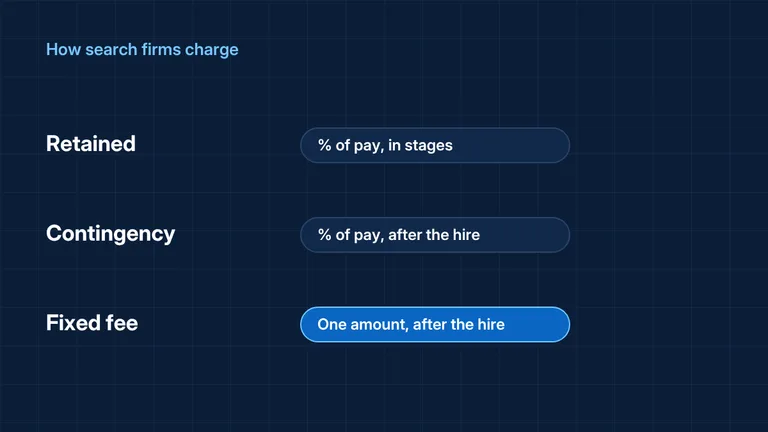
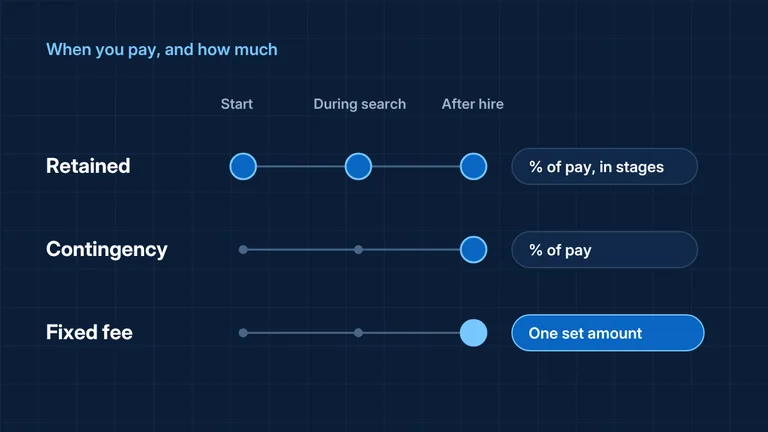
Most firms charge a percentage of the new hire’s first-year pay. In a retained search it is paid in stages, partly before the hire. In a contingency search you pay only after the hire. A fixed fee is one amount agreed before the search starts.
At Talentholo you pay after the hire, and the fee model is agreed in writing before the search starts. All three models are compared in executive search fees.


















 Magda Szczepańska
 Gosia Motylińska
 Sylwia Gajda
 Dorota Rempichel